Only two days remain for me before I leave City of Asylum for good. An experience that cannot be explained or reduced to an article, but I will try as much as I can to tell what I am able to condense, for memory, for gratitude, and for what remains of words.
I am not exaggerating when I say that this experience is equivalent to a PhD or more. And that door that opens every evening for the parties, one cannot walk out of it the same way one walked in.
Years in this place during which I came to know some of the best people who have passed through my life. I cannot say everyone was on the same level, but most were unforgettable people. People who remain stuck in the memory forever.
Things I regretted saying, and words I regretted not saying. Things I attained, and others that stayed suspended in the air. I got angry, I smiled, I cried, I felt proud, and everything passed as if it were nothing but sea foam.
These are my last days at the City of Asylum organization. Days in which I catch my breath and look back: what I left, what I did, my patience at times, and my impulsiveness at other times. Things I loved very much, and others I wished had been better.
City of Asylum saved me. It gave me a platform to speak from. It restored my dignity more than once. I lived there the sweet and the bitter: from the Salman Rushdie incident that shook me from within, to the mysterious death of my friend Shiber. And between them, many invitations, many questions, and many parties that did not end. But the sorrow inside is not erased. Sometimes we cast our sorrow onto the people closest to us, onto those we love.
There was a lot of competition among writers, and there was a lot of love, too. Everyone wants the stage, but when the blood cools, everyone wants life. In the end, it is only about life, how to survive. No more and no less. The life that lets us down sometimes and stalls us at other times, but always leaves us a small reason so we do not lose hope.
I would be lying if I said my experience was always ideal. People change, and others come along. Some are like angels, and some have been weighed down by life and no longer care much. But the steadfast ones are the most beautiful. They are the soul of this organization. The soul that made me, more than once, feel appreciation and gratitude.
City of Asylum has, since its founding, brought life back to the city of Pittsburgh, and brought in voices from all over the world to protect this city’s iron from rust. And since I arrived, I found generous, friendly people who believe in what they say, keen to preserve this spirit. I loved them to the point that they got under my skin, became part of me, and I will never forget them as long as I live.
In the end, what always remains are the beautiful things. I remember every joke said offhand, every evening gathering, every laugh, every embrace, every hug, every smile, every hope, every dinner, every party, every dance.
Perhaps I was not given the chance to say everything I wanted to say, and I could not always control my image in this organization’s mirror. But I seized every opportunity to say that I love, that I forgave, that I embraced, and that I moved on, even when it was not in my power to move on. And I was honest when I said I would leave.
Thank you to City of Asylum for granting me my second chance to live. And I will leave now the way one leaves a home one has lived in for a whole lifetime: quietly, with a full heart, carrying with me all the keys that no longer open doors, but will remain heavy with love and memories.
My story of turning Pittsburgh into another Algeria. (By Anouar Rahmani)
Four years ago, I arrived in Pittsburgh: eyes full of fear, a pale face, trembling hands. I had just fled persecution that lasted 14 years of my life in Algeria, because of my human-rights activism, my banned books, and my ideas that had long been described as licentious, deviant, and heretical. I fled a world that demonized me for speaking my mind, to land in a country where I did not know what awaited me, but I trusted blindly, out of gratitude, the organization that brought me here. The weather was cold and snowy, so I did not expect Pittsburgh to resemble Algiers in any way. And when I saw the river frozen for the first time, I lost hope that it could be my new Algiers. For Algeria, where the sun blooms every day as if it were a new sun, water does not freeze.
Perhaps one does not realize that in exile, homelands are not left behind; rather, we re-interrogate them in the new worlds. Like a mirage, we see them from time to time, dancing for us in the shadows of things. It has nothing to do with longing, obsession, pain, or patriotism either. It is deeper than that: it is a moment of pride mixed with cortisol, in which the exile tries to recreate the homeland, tries to be a god, because nothing satisfies the brokenness that follows exile in the soul except becoming a god and a creator. Thus, like a broken-spirited god, and with pride, I carried Algeria’s crooked rib with me, that painful rib with which to recreate Pittsburgh.
I arrived at City of Asylum, a big house, but the only house without a name. A yellow door and a wall without drawings, unlike the other houses; a hidden house, lonely and gloomy, but unique and exceptional. it resembled me. When people asked me which house I lived in, I would say ‘happily’: “In the house with no name”. With time, my enthusiasm waned, and I began pointing with my index finger at the Coma house in front, so as not to stir sensitivities. There were no east-facing windows in my house, where Algeria is; all the windows looked west, as if the new place wanted me to forget where I came from. But everything in Pittsburgh later revealed itself as Algerian in a way I had not expected. And just as Algeria and America share the same zodiac sign, both countries celebrate their independence in July; perhaps Pittsburgh and Algiers grew from the same placenta.
When my feet touched this frozen land, some flowers of the Atlas Mountains sprouted on Mount Washington, and at jazz events in “Alphabet City” I met world-famous writers and actors: Orhan Pamuk, Ben Okri, Mark Rylance, and many others. When they learned that I was from Algeria, they devoted a respectable amount of time, at dinner parties, to talking about it: about Algerian literature, Algerian philosophy, Algerian cinema. Above all, about Albert Camus, Frantz Fanon, Jacques Derrida, Assia Djebar, Kateb Yacine; about the Algerian revolution and how it affected the world. And the classics of Algerian cinema, foremost among them the Algerian-Italian film, The Battle of Algiers. Others told me about Cervantes living in captivity in Algiers and writing some of his novel Don Quixote there, and about the Barbary Coast wars, and before that about Berber philosophers and writers from Algeria in bygone eras such as Saint Augustine, Saint Monica, Lucius Apuleius, and others. And in the openings of the events, there was the history of ICORN International network for Writers at Risk, under whose umbrella the City of Asylum Pittsburgh organization falls, this global network previously known as the Writers’ Parliament, which was founded by Salman Rushdie and his companions, was originally aimed at saving writers and journalists in Algeria during the civil war in the 1990s, then it developed to include other countries. For Algeria, everything began, then, I wondered to myself, so did I really leave Algeria?
If we were honest, everything began in Algeria in the first place. After Algeria’s independence in 1962, when the city of Algiers turned into a destination for revolutionaries and global intellectuals. After a war of liberation from the yoke of a colonialism that lasted one hundred and thirty-two years, during which millions of Algerians were killed, in a mass genocide, and through an armed revolution that lasted seven years in which women participated strongly, and that received great international support from major figures such as the painter Picasso, the philosopher Jean-Paul Sartre, the surrealist artist Dali. And the arrival of Frantz Fanon from the island of Martinique to Algeria as a psychiatrist, and his transformation in Algeria into a philosopher, and his joining the National Liberation Front and his choosing to be Algerian and his work as an ambassador for the Algerian Provisional Government, and after he fell ill with leukemia he asked to be buried in his new homeland whose making he had helped shape, Algeria, and that is what happened. Thus Algeria became a global symbol of liberation and struggle, and many figures flocked to it seeking asylum and support, among them even Americans, and this is what made me say to Americans, sometimes sarcastically, that with me being a refugee here in America, you are only repaying me a favor.
Algiers became the capital of the Third World, and this is what Elaine Mokhtefi, an Algerian American and one of the heroines of Algeria’s liberation revolution, writes in her memoirs published by Verso Books. Elaine visited me by coincidence, on the day my new novel The End of the Third World, was presented in Pittsburgh, I held her hands tight, I loved her at first sight. we spoke at length; history walks on two feet. A woman of steel, and the only living witness to Frantz Fanon’s militant life, as she worked with him hand in hand at the embassy of the Algerian revolution in Ghana, and with many militants. After independence, Elaine Mokhtefi lived in Algiers, where she was able to persuade the Algerian authorities to bring activists from the American Black Panther Party to Algeria, where Algiers became the movement’s global center; in that period, a refuge for many American activists and intellectuals, among whom we mention Eldridge Cleaver, author of the book Soul on Ice, Kathleen Cleaver, Donald Cox, Timothy Leary, one of the pillars of the white counterculture revolution in America. Algeria also received activists from all of Africa and the countries of the South, and supported activists from Portugal, Ireland, Canada, and contributed to bringing down the apartheid regime in South Africa, and trained and funded Nelson Mandela, who states this explicitly in his memoirs. When the West was calling South Africans terrorists, Algeria was granting them passports, as happened with the South African singer Makeba, who sang in Algeria after the fall of apartheid in her country the song “I Am Free in Algeria.” All this and more made the city of Algiers deserve the name Mecca of revolutionaries. Algeria was the original experiment in welcoming activists and free writers, three decades before the start of the ICORN network, and more than four decades before the beginning of City of Asylum Pittsburgh. Everything may have been just a bigger and richer duplicate of ‘Algiers Mecca of Revolutionaries’.
My search for Algeria in Pittsburgh did not end there. When I arrived at this organization, I was the first Algerian writer to reach here, the only Algerian to this day, and I was among few writers whose activism, was largely documented through international and human-rights organizations around the world, including Front Line Defenders, Human Rights Watch, and UN reports. And international recognitions from the German Bundestag, PEN International, and Index on Censorship. All of this drew a great deal of attention to me in America: invitations to several universities and to several events. And given Pittsburgh’s long activist history, workers, steel smelters, and the working classes, and its activist history for women’s rights too, there was something of Algeria’s spirit permeating the smell of the air mixed with iron particles, just like Pittsburgh in Algeria we put fries in our sandwiches, and we think we’re all steelers. All of this contributed to my ability to “surge forward” and express my ideas in this space without fear. And I took advantage of every opportunity to talk about the ills of America’s healthcare system, the homeless, and LGBT rights, thinking that America was the nest of peace I had always awaited. But here, with soft repression that does not speak its name, it was decided to place me on the margins: to stop inviting me, or to besiege me. No invitations again, no attention. And when everyone was talking about their country freely, I would sit with the audience to listen to others, from America, France, and other countries, talking about us, Algeria, Algerians, about our literature, our history and our revolution, about our pains: many mistakes, much indifference to the millions who were exterminated, to the bones of our dead that were used to grind sugar and wheat in France, as Xavier Le Clerc says, and I would content myself with painful applauding.
For just as Albert Camus erased Algerians in his novels, and just as he killed an ‘Arab’, an ‘Algerian, in ‘the stranger’ without naming him, symbolic killing continued to pursue me as an Algerian in America, as if it were a sacred tradition in the West that the Algerian be erased, his character assassinated, and his work attributed to others, because in Algeria their myth of superiority collapses, because in Algeria we write and struggle without asking permission. Here too, to be honest, I have gone through the same mechanisms of oppression, softer but sometimes more painful. I couldn’t find a job: I kept receiving rejections no matter what the job was. And here I am leaving the organization, not knowing what fate awaits me afterward, amid a wave of hatred and absurdity against immigrants, LGBT people, and intellectuals, while I represent all of them. And a lot of ICE this winter. I am cold and afraid.
Algeria said its name again when I heard Trump made fun of our Algerian woman boxer Imane Khelif and call her a man. Elon Musk questioning her womanhood, and the whole west insulting her for winning a battle against an Italian woman, for them she was not a woman because she was too strong, now for them she is not a woman because she is not enough of a beauty. Who would ever imagine an Algerian woman to be a scarecrow in the anti LGBT propaganda in USA? since I arrived here, everything seemed like an illusion.
In Pittsburgh, I have seen Algeria incarnating since I arrived. At Point Park, from above, I saw something resembling Tuareg jewelry (south Algeria), and I heard the voice of ‘my executioner’ in Caliban Bookstore in Oakland, Caliban, who is the son of the Algerian Sycorax from Shakespeare’s last play, The Tempest, where the Algerian was presented as a savage person, with no connection to civilization. And I found ‘Alger’ Street named after the Algerian capital, near Carnegie Mellon University, and I ate a couscous nearby, and I met the well-known Algerian writer Amara Lakhous. And all of this ended with a museum like exhibition created by one of the founders of City of Asylum Pittsburgh to celebrate the poems of my colleague, a Sudanese writer residing with us in the program, using Frantz Fanon’s book Dying Colonialism, which talks about the Algerian revolution and Algerian society (original title: The Fifth Year of the Algerian Revolution), and Albert Camus’s book The Plague, which takes place in the city of Oran west of Algeria, where my father and my mother married, and a big a map of Oran on the exhibition’s outer wall.
Algeria followed me here, too. But again, I couldn’t utter its name.
When Algeria started its manifestation in Pittsburgh, I felt Sometimes Happy, sometimes burned out, sometimes sad, and sometimes breathless. My history, my pain, my geography, my ego, my pride, my name, Anouar, often not pronounced correctly in Pittsburgh, all of me was denied. Not because it is my homeland, but because it is the narcissistic wound that exiled me in the first place. Because there, in Algeria, I was told you are not Algerian because you are gay; and here I was told also: you do not deserve to represent Algeria because you’re ‘Algerian’.
Thus, Pittsburgh in its entirety turned into a new Algeria, the same Algiers I left behind, with its beauty and its repression. With its Clementina and ‘iced’ coffee, for I wished Pittsburgh to be a new Algeria, and God granted me my dream; perhaps if I had wished for a billion dollars, I would be fine today, but because I wished for Algiers so strongly, and created it with my own hands, Pittsburgh became a homeland that pats my head and excludes me without realizing, perhaps, or without confessing. Maybe, Pittsburgh did that, just to remind me why I had to leave.
Chapter One of my first novel, published in 2016 and subsequently banned in Algeria. This text revisits the story of Mother Mary through a radical shift: imagining her as an Algerian woman, devoid of sanctity. The question is no longer divine election, but survival under patriarchy. written and translated from Arabic to English by Anouar Rahmani
She shook the tree trunk with the strength of a girl desperate to live, but nothing fell, only the ominous fate, as she tried to give birth to a mirror that resembled her, to throw it into the sterile valley, to hide her wasted honor and the family’s poisonous words.
She kept clutching it, gritting her teeth, screaming and crying violently, clawing at her thighs, wrestling with fate in children’s tears and saliva dripping from her mouth as she lost control of her glands. She wanted to expel this great guilt quickly, to satisfy the higher will of a filthy society.
Her heartbeat irregularly, fast, then slow, touching the sensitivities of a tragic scene forged by social hypocrisy: within her, around her, and in everything erased in between. A tragic scene, shaped by the thoughts she secretly carried in her head, a head condemned to imagine nothing but the contours of an unknown future, where perhaps she could forget this living present that made her give birth to her first child in the woods, under the tree, just as Mary did in the Qur’an, at the age of fifteen.
Her black skirt, dirty shoes, and sad face, stained with the ugliness of this painful memory, were witnesses to a crime: the martyrdom of childhood.
She gripped the tree trunk with one hand and the dirt with the other, throwing it and screaming, “Get out, get out!” The fetus did not understand. He stalled her while she screamed in pain. She pushed him hard as he clung to her insides, unwilling to fall into the well of this terrifying world he had already heard too much about while swimming inside her. She clenched her teeth as if biting through the pain, pushing until a ray of his voice pierced the outer world. His eyes caught sunlight sneaking through the cedar branches, and his head opened the gate of life, creating a smooth, sticky music at the threshold of that deep house—his feet striking like hammers, driving nails into her coffin, the one she had wished for so desperately, but in vain.
When the last toe emerged, and the birth was complete, he cried out—hating his human fate, hating the breath of hypocrisy that filled this great ‘nation’. Maria held him in her trembling hands, gazing at him with overwhelming joy and unbearable sorrow, a terrible contradiction etched across her face. Her wide smile only deepened the confusion, as tears dug into her skin, carving out a single question: “Why is this happening to me now?”
She held him to her small chest and walked gently toward the valley, still gazing, holding. She didn’t dare throw him away. She didn’t want to. But she had to. If she brought him back to her family, they would both die.
She didn’t have time to give him a name. All she could see in him was the word scandal. Even maternal instinct quickly reduced to zero, stripped of meaning by society’s oppression. The survival instinct overpowered the maternal one. And if she truly carried two instincts within her, one longing to be the mother of future children, and the other to be the mother of this one child without ever being allowed to keep him, they were now locked in a silent war.
She took off her shoes, holding her fetus stained with puerperal blood, and continued walking toward the valley. She stood for a while, looked at her reflection in the water to make sure it was really her and not someone else, then cried for the last time. She sat on the edge of a rock, in front of her some scattered spikelets stirred by a breeze that seemed indifferent to Maria’s fate, the same breeze that once rejoiced with her, and now did the same, unchanged despite her sorrow.
She kept staring at her newborn son, who had left her the moment he was born. She pulled out her small breast and began nursing him with milk mixed with fear, betrayal, and social oppression. The child sucked greedily, as if he knew it would be the last time he felt his mother’s warmth. And before he could be satisfied, Maria laid him down with sudden detachment, as if even she couldn’t understand why. She placed him atop the rock and stood watching him, crying, screaming, forcing herself to play the role of a cruel, unfeeling mother just to convince herself she could leave him.
She stood there, gazing at him like a general inspecting his army, with all the force and contempt of a commander. She remained as still as an electric pole, motionless in her postpartum state, yet paradoxically full of energy, like a mare in the wild. Though still young, the horror of the moment had summoned within her the full strength of madness and lucidity, an overwhelming detachment from the world.
She imagined him being devoured by wolves. Then she thought of the human wolves she lived among and realized that no beast could harm her child more than society itself. She thought of thieves and strangers, then understood that no one could wound him more than the mother who would abandon him.
She looked at him one final time, then ran away without looking back. His voice grew more distant as tears poured from her eyes, her heart, her lungs, her breasts, her lips, her lust, her soul, her pores—every inch of her. That day, she renounced her nature, her highest instinct, and became a human wolf for the first time in her life, like all the wolves who had made her do it.
The scream and the rock echoed the same rigidity, the same numbness, a pain laced with insensitivity. Her scream soaked into the rock and bloomed from the valley as a grotesque flower of biological betrayal: the image of a baby fighting the air with his hands, driven by a primal reflex of survival. She defied the laws of nature amidst the valley’s green thirst for mineral salts that might one day sprout from the decay of a body left too long in silence.
She had been just a girl who loved to play with others her age. Her adolescence knew only a vague sense of desire, not yet fully formed, not yet corrupted. She had only ever heard words like “shame” and “haram” whispered around her. She always remembered her mother striking her pubis and saying, “This is your honor. This is you. This isn’t yours, it belongs to the family. Never return without it. This is our daughter. Not you.”
Those words stripped her of all sense of childhood. Her mother’s voice echoed in her mind, teaching her to live for something she didn’t understand, something that would later become a weapon of crime.
Before that, Maria had lived in a world dominated by men, and her femininity existed only in innocent games—playing ؛luqaf؛ or ؛ghumiza؛, skipping rope, going to school like every other girl. She welcomed the piece of cloth in the sky they called “honor,” the same cloth that clouded her genitals and bound her with collective shame. She swore by her defeats, walking kilometers to reach school. Still, childhood dreams made even the harshest realities bearable—except the ones forced upon her without consent.
One winter day, like any other, she left school alone. Snow covered the village, and she picked wildflowers along the way. A man pulled up in a car and said, “Maria, are you Si Makhlouf’s daughter?” She replied politely, “Yes, sir.”
“Come with me,” he said, “I’ll take you home.”
Maria sensed something strange in his tone, a malice cloaked in kindness, but her childhood ‘naïveté’ let her step into the car. “My name is Omar. I’m your father’s friend,” he said. “Don’t you remember? I slaughter sheep during Eid.” She relaxed, vaguely remembering him. “The road is blocked by snow,” he added, “I’ll need to take another way.”
But his hand began creeping onto her thigh, rough, ugly hands swollen from the cold.
“You’ve grown, my daughter,” he whispered.
Fear engulfed her. She turned her head every which way, hoping he would stop. But he didn’t. He gripped her leg with all his strength, and when the pain was unbearable, she tried to push his hand away, whispering in a voice closer to breath than to sound: “Let go. You’re hurting me.”
On the back seat was a book smeared in oil. The torn pages looked like her thoughts—chaotic, stained. One word stood out: ‘Love..’
Maria, desperate, imagined a thousand ways to escape. She even considered using the book as a weapon, but it was too light.
He parked the car in a place so godforsaken it felt like even the angels had turned away. Justice didn’t stir. He stripped her—not violently, but ‘politely’, as if that made it better. He didn’t tear her clothes. He bit her, groaned, and forced himself onto her. She kicked, bit, screamed—but he only grew more excited.
When it was over, he took a handkerchief from his filthy coat and wiped her genitals, as if that could erase what he had done. She cried without sound, watching her bruised vulva breathe in shame. She didn’t even know what rape was, only that something precious—something sacred—was gone.
“Put your clothes on,” he said. “Don’t tell your parents.”
She couldn’t reply. The trauma was too big for words, for thought, for breath. Her dreams were shattered. Her nightmares, born.
On the way back, everything familiar turned alien. There was the tree where she used to play hide and seek. There, the chalk marks from skipping rope. Inside the car, a plastic amulet with a verse from the Quran swayed before the mirror. And Muammar, humming an old song as if nothing had happened—nothing except the annihilation of a girl in bloom.
He dropped her off at home. “Thanks, Muammar,” her father said, smiling. “Society is full of bastards. We’re lucky to have people like you.” Muammar replied, “It’s my duty.”
Maria stood burning. Her father was thanking the man who raped her. And the rapist, proud of his crime, replied with icy grace: “No thanks for the duty.”
That was the moment Maria understood what society really was. A moment that would never leave her.
Her childhood vanished. Sex lost meaning. Nothing mattered now except hiding her shame from her mother and family. She was reduced to a hymen meant to survive until marriage. “Honor” was no longer hers—it belonged to the patriarchy.
From that night on, Maria couldn’t sleep. The memory of “Si Muammar’s surgery,” as she came to call it, haunted her dreams, colonized her body, and buried her innocence.
She screamed every night, living a nightmare she hadn’t chosen but that had been chosen for her. Perhaps it was divine destiny that wanted her to suffer like this, or maybe it was the doing of a great novelist named “God,” who knew how to entertain. Maria saw the malice of the society she lived in and understood that her life would be a long struggle—it would not be served to her on a golden platter as she had once imagined.
Her mother called out in her usual fantastical tone, reminding her of her slavery to men: “Maria, come help me in the kitchen.”
Maria silently wiped away her feelings and went to help, choosing to peel onions so she could cry freely.
Her school days were nothing but silent, sad, and full of fear. She often went to school without combing her hair. She once dreamed of becoming a doctor, but now her only wish was to go back in time and never get in the car with Si Muammar.
In a rare moment of courage, Maria stood before her parents and said, her voice steady with conviction: “Mom, Dad, I’ve decided to quit school and devote myself to the house.” Her father smiled:
“May God be pleased with you, my daughter. Thank God you’ve made the right decision.”
She might have rejoiced at her father’s approval, but she remembered she was trapped in despair. Her unhappy adolescence refused to leave her alone.
She looked out the window—its glass clouded by cold and humidity, the frame swollen and no longer able to close—and saw children playing innocently outside. She touched her lips and cried silently, her tears growing brighter each time the sun broke through the clouds. Then came the nausea. She ran to the bathroom and vomited—the first sign of pregnancy.
Maria wrapped herself in her blue wool shawl and went to her neighbor, Sakina. After a long chat, she asked, smiling to mask her pain: “Sakina, how does a woman know she’s pregnant in the first few months?”
Sakina laughed loudly. Maria didn’t. She rephrased her question: “But what are the signs?” “When you get married, you’ll know,” Sakina replied. “But I want to know now.” “There’s nausea and dizziness, among other things,” Sakina said.
Maria stood up and left without saying goodbye. Sakina, confused by her behavior, shrugged and went on singing.
For days, Maria moved through the house like a ghost, speaking to no one, doing only what was asked of her. Then she had an idea—her blind grandfather, who lived alone and whose care rotated among the women of the family. If she went to live with him, she could hide her pregnancy. It would appear as an act of kindness, but in truth, it was her way of covering a crime she never committed—she had simply been at the scene.
She turned to her mother and said, nervously scratching her hair and nose: “Mom, how about I go live with Grandpa? He needs help, he’s an old man.” Her mother gasped:
“What’s wrong with you? Are you crazy? You want us to send our virgin daughter to the top of the mountain with a blind old man who can’t defend you?”
“But Mom,” Maria replied, “there’s no one there but the trees and my grandfather.”
Si Makhlouf entered the room: “What about your blind grandfather?”
“She wants to go live with him,” her mother said angrily.
Makhlouf kissed Maria’s head and said:
“He’s an old man who’s been abandoned by everyone. And you, my daughter, you want to help him? I won’t stop you. Tomorrow morning, I’ll take you to him.”
Maria seized the moment: “But I want to go now.” He nodded. Maria accepted.
She quickly packed a few clothes and left with her father for the mountain. The sky there felt close, like the source of her ominous fate. The only eyes that could follow its script were those that could not see.
Her grandfather welcomed her warmly, but soon his orders became endless. Every time he asked for something, Maria would spit toward the sky and get to work, her way of defying the cruel author behind the clouds.
Months passed. Each week, her belly grew. Whenever her family planned to visit, Maria ran to the woods to hide. She tried again and again to miscarry, but the fetus clung to her, clinging to life.
Then, on a miserable and emotionless day, Maria gave birth and left the baby behind.
As she fled the battlefield of her birth, she felt a thread slicing through her heart. The unity of time and space shattered within her; the sky and earth became hollow numbers without meaning. With the umbilical cord still dangling, all she could feel was disbelief. She no longer believed in anything—not family, not tradition, not God.
She arrived back at her grandfather’s house and fainted. He called for milk. She awoke, sobbing. He touched her face and held her in his arms. She cried until sleep took her.
When she awoke at nightfall, she ran to the valley searching for her son, desperate to find him alive. She ran like a madwoman, like a mother who remembered too late. She sniffed the rocks and cried out: “My son, where are you, my love?”
She returned home, grabbed her grandfather’s old dagger, and headed to the village. She searched for Si Muammar’s house for two hours, then found it—the same car that had carried her to this fate. She climbed into the car, cried, and waited. When he came out to relieve himself like an animal, she crept behind him and slit his throat. His pants tripped him as he bled out into the dirt. She stood over him, watching.
Once she was sure he was dead, she returned home, replaced the dagger, and went to sleep as if nothing had happened. She had just turned sixteen. In one night, she had become a murderer.
She slept as if she hadn’t abandoned her child. As if she hadn’t orphaned him. As if he weren’t perhaps already dead. She slept like a ship adrift on the Dead Sea—silent, still, empty.
She woke at midday, washed her face, combed her hair, and noticed her grandfather hadn’t called for her. She found him motionless on the bed. When she shook him, his cane fell—and with it, so did he. Dead.
Panicked, Maria dashed barefoot down the mountain, the tall trees rustling behind her. She reached her father and said:
“Grandpa is in heaven.” He said nothing, only covered his eyes so as not to break down. Maria embraced him.
After the funeral, Maria often wandered the forest in search of her son. She never found him. But she never stopped searching. It became her new daily task. And she always smiled. She didn’t ask why she had left him. She hadn’t left a person—she had discarded something that clung to her. It wasn’t even her searching anymore. It was instinct.
Days later, she received a marriage proposal—or more accurately, a legalized rape. A 35-year-old man named Abdel Rahim asked for her hand. Her father accepted without consulting her.
Abdel Rahim was kind. He brought gifts. Maria played the role of a young bride, dressing up, pretending, lifting her bra, wearing fine underwear. She wanted to feel desire again. But she also feared he would discover her past. She wasn’t a virgin. She wasn’t honorable. She wasn’t human in a society of men and cows.
Days before the wedding, her mother gave her a crude lesson in sex. Maria just nodded, pretending to be naïve. But she knew everything. She was not just a bride—she was a mother. She remembered her child. She wanted to heal through Abdel Rahim’s body, but the crime lived in her flesh. She would never make love legally.
Still, she told herself everything would be fine, even though she knew it wouldn’t. Her body said otherwise. Her hair, her heartbeat, her eyes—all betrayed her.
The house buzzed like a town awaiting a dragon’s wedding. Drums shook the walls. Children misbehaved. Girls danced like women, but they didn’t know what a woman truly was.
Maria emerged in her bridal gown, surrounded by music and jealousy. She was stunning. She danced like someone possessed. Her smile was wide. Her makeup made her look ten years older. But inside, she was still a girl. Still grieving. Still hunted.
And then came the final realization: This wasn’t just a wedding, it was the burial of her past, of her memory, of everything. She danced because there was nothing left to do. She smiled, but the smile was a blade.
At that moment, she understood: God, the society, the novelist in the sky, they were all the same. They were playing with her life. And she stopped believing.
Why is he afraid of the dead? Why does he long for life? Why is death still death if life fills it? Why is life still life if death kills it?
These unconscious questions detached her from reality. She walked like a machine, pretending to be happy. Women took her by the wrist; others held candles at sunset, carrying his luggage as part of the spiritual rites society used to perform to break the sacred hymen.
Maria got lost in their glances. She had a flashback: her birth, parting from her son Jesus, her grandfather, her childhood games, her mother teaching her the rituals of lust and how to arouse a man. She remembered Abdul Rahim, who loved her sincerely, and to whom she sincerely hid things. She never wanted to lie, but could never tell the truth.
She was led to the sacred matrimonial chamber to complete the blessed insemination. The chirping exceeded the size of true joy. Every woman wished the wedding would fail. The entire village awaited the scene where the bride’s family would shoot gunpowder into the sky, celebrating the preservation of her honor until it was taken by her husband. Everyone suffered from sexual repression. Their fantasies knew nothing of truth.
Some women didn’t believe a man’s penis could be as big as a stick. Some teenage boys imagined sex as merely inserting it into a small hole, hurting her, licking a little, and then being done.
Abdul Rahim lifted her veil, and she lifted her lust. He kissed her neck, suckled gently behind her ear, and moved slowly toward her lips. Maria trembled. Her longing for her son was mixed with lust for Abdul Rahim. She touched the coarse hair on his chest. He undressed, kissed her, lifted her by the waist, licked her feet, undressed her gently, and dragged her mouth across his body. She felt beautiful pain. But fear of scandal made her close her thighs as if saying: “Don’t.”
He understood her hesitation. It was her first time. He tried to warm her up. He wrote his stories on her skin, leaving marks of his manhood. The chirping outside drowned their moans. Everyone waited for news of her “complete virginity.” Was she “honorable”? A virgin?
Time passed. Nothing happened. Seconds became a measure of honor. One woman joked: “Her hymen must be rough.” “To which the other replied: “Or she has two.” They laughed.
Inside, Maria became a toy in Abdul Rahim’s hands. He filled her with lust. Her youth made her appear like a full-figured woman, though she was barely sixteen. He searched for his treasure with his tongue. Her orgasm would crown his pleasure. He grabbed her, sucked her nipples, surprised to find milk. He ignored it. A mystery of women, perhaps.
As he penetrated her, he saw her tears—like a weeping spring. She returned to childhood. She needed a breast to rest on, but had only his rough, naked body. He didn’t know what to do. Was it fear or love? He wiped her tears, hugged her. Maria continued crying. Her son’s image consumed her.
Her father, outside, sweated, terrified of scandal. The obedient daughter could not let him down. She tried to forget her son, blend into this bitter reality. She opened her thighs, turned her head to the left, and stared at the candles meant to ward off evil. But tonight, she was the evil in their eyes.
Everyone still waited. Silence fell. A heavy atmosphere lingered. All eyes on the door, waiting for Abdul Rahim and the bloodied handkerchief of honor. This village had a phallus, it had to be used to validate morality.
Abdul Rahim slapped her twice, spat on her. He began raping her violently, front and back, taking revenge. She sobbed. He screamed. Their cries pierced the night. Villagers laughed, then women began singing to cover the sounds.
Eventually, silence returned. Abdul Rahim came out with the handkerchief. Her father smiled, extending his hand, but Abdul Rahim threw it down, spat, and said:
“Your daughter is divorced three times.”
Then he left.
The father stood frozen. Some guests left; others, scandal-hungry, stayed in spirit. He entered. Maria lay naked, wrapped in a blanket. She whispered painfully:
“Father, I am a virgin.”
Yes, still a virgin in conscience, if not in flesh. But if she told the full truth, she’d be confessing to murder. What’s the point? She’d be killed by law or by “honor.” Her mind told her to remain silent.
Only her son kept her alive. She still believed he lived. A mother’s heart knows. But her morality, youth, and beauty denied her peace. Rituals bound her. Her father dragged her by the hair, naked before scandal-hungry crowds. The narrator, again, did nothing. He liked what society liked. Society was God.
She was silent, in denial. Her lips barely moved: “I am a virgin.”
Yes, she is still a virgin despite everything that happened to her. She never chose to lose her virginity. She remains a virgin in her conscience, not in that sexual organ. But how could she tell the truth? Despite it all, she still retained a certain intelligence. She knew that if she confessed the whole story, she would also be confessing to murder. What was the point now? She would be killed, whether in the name of honor or the name of the law. Her mind told her to stay silent and to speak the truth all at once.
The only thing keeping Maria alive and away from suicidal thoughts was her son. Despite everything, she still held a deep hope of finding him. A mother’s heart never lies—his heart still beat in the cavity of her own, his voice still rang in her ears. Her son was still alive, and she had to find him. Now was not the time to die.
Maria’s age, her morals, her manners, and her beauty did not allow her a single moment of peace to go in search of him. She was trapped by the rituals of the village and the alphabet of its rotten morals.
Her father grabbed her by the hair and dragged her naked in front of the crowds, starving for scandal, pulling her as though she had just lost every last shred of honor, as if her body no longer held any value. She was exposed in their eyes, even if she didn’t know it.
The narrator, as always, did nothing to save her. He seemed to love what society loved and hate what society hated. It was very clear: society is God.
Her father dragged her, and she made no sound, nor did she show any sign of pain. She was in a state of denial. Her lips moved faintly, as if whispering: “I am a virgin.”
He dragged her while sobbing, yelling, “What a waste of my upbringing. How could I have raised a Dereli like this? What’s wrong with you, you little whore?”
He dragged her while cursing. The young men of the village gathered to feast their eyes on her naked body, memorizing every inch of it, knowing they might not see another until marriage. Some even chose to masturbate to preserve the image.
He dragged her home, whipped her naked body, crucified her on a tree in the middle of the house, and began lashing her with what looked like a whip, screaming as Maria’s mother wailed and lamented like a madwoman.
After torturing her all night and tearing her soul apart dozens of times, demanding to know who had done this to her, and hearing her repeat over and over that she was still a virgin, he finally broke down and screamed like a giant ogre. His honor was tarnished forever. The only thing stopping him from killing her was the hope of learning who the culprit was, so he could kill them both.
He left her crying in pain and sat alone, sobbing like a child. Maria was completely unconscious of what was happening. All she could think about was her son, instinctively, but without emotion.
In the morning, her father ordered that she be denied food, forced to stay that way, or, as he put it, “like a dog.” Although in this case, even the guard dog fared better than her.
In this merciless society, Maria was now the worst person alive. Despite all the murderers, criminals, extremists, thieves, and rapists in the village, she was the one who deserved punishment, even though she was the victim. Not just a rape victim, but a victim of an entire society with outdated values and shallow ideas of morality.
Maria was simply female. Do you understand the crime now?
Some boys were playing and talking about the body they had seen the day before. It was a miracle for them to glimpse such a body at that age. They even entered into a philosophical debate about the true shape of a woman’s genitals, drawing what they saw in the dirt with reeds. In that village of deprivation, Maria’s body had become the dream of every man and boy. Many children climbed the house fence just to catch a glimpse of it.
The inhabitants of this village had mastered all the rituals of terrorizing a woman’s body. To them, a woman was nothing but a body, nothing but a tool to satisfy a man’s desires and serve him in slavery. That’s why the “eternal shame” must always be covered.
Amid all that black noise, Maria found some comfort in singing to ease her pain. She sang local songs in a frail voice, softer and weaker each time, as she lost more strength.
That night, while everyone slept, Maria heard footsteps approaching. They moved stealthily to avoid waking others, crunching softly on pebbles and stone. It was the sound of feet—no doubt. Maria searched with what little motion her head could manage, terrified of yet another rape, her body already weary from the rot of society.
The sound stopped, but Maria kept searching. Suddenly, a hand closed over her mouth, and a young man’s face appeared. He placed a finger over his lips, signaling her to stay quiet.
She looked closely. In the darkness, some details of his face became visible. From his cautious eyes, she recognized Oma, her childhood friend from before she went to school. Maria calmed slightly, inhaling the sweet scent of childhood, not even knowing why. Though her body still trembled with the trauma of masculinity, she tried to understand why he had come.
He took the gum out of his mouth and whispered, “Maria, you must run. You have no place here. If you stay, you will die.”
Maria stared at him for a moment, then asked, “But where will I go? Where will I go, Omar?”
“God’s earth is wide,” Omar replied. “Run wherever life is still possible. Anywhere but here. We don’t have much time.”
Omar cut the ropes that bound her with a pocketknife, gave her a dress and a niqab, and helped her get dressed.
For the first time, Maria met a man who didn’t care about her body. He helped dress her without the slightest hint of lust. She was confused by him, but didn’t have time to dwell on it. She donned the black abaya and veil, and Omar lifted her gently to avoid making noise. He helped her climb the fence, then followed her, holding her hand to guide her down.
He gave her his sandals to walk in, remaining barefoot.
The darkness merged with the blackness of the veil, and only her eyes were visible. They walked quickly toward the forest near the highway. They entered one of the reed huts Omar and his friends had built during childhood games. He lit a candle and placed it on the small table.
He gave her some olives, dry bread, cheese, and water. She devoured them like a starving animal, as if she hadn’t eaten in years.
Omar kept gazing at her with a tenderness mixed with quiet love. His face calm, his eyes glowing under the candlelight. He said in a heroic tone, “Maria, don’t be afraid. Everything will be okay.” Then he sighed, smiling gently to ease the tremor in her body.
“Do you remember when we used to play? When we pretended to be aunt and neighbor, or bride and groom?”
Maria sighed. “If I had known what marriage really was, I’d never have played it, even as a game.”
“Don’t forget the beautiful moments,” Omar said. “Don’t forget your childhood. Always be yourself. Don’t hesitate to try again. And above all, don’t lose hope—because you are human first, and humans are made to hope.”
“Now go to sleep. In the early morning, you’ll take the bus to Algiers.”
Maria’s eyes widened in fear. “Algiers? But I don’t know anyone there. What will I do?”
Omar took her hand. “Maria, here, you know everyone, and look what that gave you. Go where no one knows you. Go where you can be free and safe. Start a new life. Because here, there is no life left for you.”
Maria stared at Omar, tears in her eyes. She was leaving a part of herself behind in that cursed village—her son, the Christ, who was destined to live without parents. Deep in her heart, Maria still believed he hadn’t died.
Salman Rushdie was stabbed. A man stubbed him with all the strength that could be mustered. He was hit, punched, and stabbed repeatedly and with great malice, while I filmed with my phone. I couldn’t believe what was happening; I expected an intellectual and philosophical debate. I was waiting for a discussion about literature, thought, and freedom of expression. I was waiting, in the worst circumstances imaginable, for someone to take the microphone and oppose, rebuke, or even curse Salman Rushdie, not to stab him. All my mental tools were focused on receiving information, not punches. I was very attentive and fully prepared, to the point that I violated the guidelines and moved closer to the stage, away from the other writers, to listen carefully to the meeting so that I wouldn’t miss a word. I was eagerly waiting for Salman Rushdie to appear, and at one moment, the voices began to rise, and the “stabbing” began. The stabbing that has not stopped within me until now.
This happened on August 12, 2022, the same year I came to America. My American experience was still fresh, and my thoughts about this country were still swaddled. My mind had not yet grasped violence in its American form. Like many other immigrants, we initially think we are on a recreational trip and that we have arrived in paradise, before being swept away by the “violencity” of this country (if I may invent this word to avoid saying violence) and finding ourselves facing a new, more complex version of our old sufferings. A different “violencity” from what we were accustomed to in our
home countries, and we lack the experience to deal with it.
If violence were an act, violencity is the method, the process, and the mechanisms in which violence is hosted, tolerated, and structured to prepare someone to be violent. For me, violence isn’t just a surface act; it’s a deep machine. Every violent act is a continuum of a long path of violent acts in the past, present, and future. Violence is connected as a phenomenon in a way that makes the word violence too basic to cover. And what happened to Salman Rushdie can’t be isolated. It’s a product of this machine that has never been discussed as such. And by that I am not taking away individual accountability of any criminal act; however, the criminal is a logical result of violencity that preceded them, preceded religions, ideologies, and ethnicities. Violencity is the reason for violence. It’s also what makes someone able to commit a crime. And it’s necessary to say that, because this paper isn’t Islamophobic and I don’t mean by writing this to use the Salman Rushdie incident to justify hatred toward Muslims and Arabs, what often Western media outlets often do. And my condemning of this crime comes with an awareness that violence is a machine and not an Ethnic or religious Group.
The day before the incident, we went together to Chautauqua, a group of writers from City of Asylum Pittsburgh organization. We were expected to participate in literary activities at this institution alongside the founder of the organization, other invited writers, and, prominently, Salman Rushdie, as well as staff from the City of Asylum organization, including its executive director at that time. We went like scouts, as if we were a herd of writers and intellectuals to this grand event. This was the first time Salman Rushdie personally appeared on stage after years of isolation imposed on him due to the Iranian fatwa that called for his death following the publication of his famous novel “The Satanic Verses.” My back was hurting a lot that morning, yet I couldn’t miss this trip; I wanted with all my heart to meet a great and well-known writer like Mr. Rushdie. I couldn’t move smoothly due to the back pain, yet I forced myself to go; it wasn’t an opportunity that could be replaced, and the organization at that time was very generous in its offerings to writers. They were very kind, and it was somewhat like a group tourist trip to the Maldives. We spent a wonderful night in Chautauqua, a musical, classical night, in one of the most beautiful places in New York State, with many white people, many more than the eye could bear, and a few from “other races,” as Americans would say, in places that were hard to spot. During this journey, I learned many things I did not know about this country; classism became manifest to me in its clearest form at the Chautauqua Institution (not for what it is, but for what it resembles) which is perhaps not an institution in the traditional sense, but a small, isolated, fortified city inhabited “maybe” by the wealthy, and entry was through a “visa”—we stood in line and waited to obtain it. It was a charming place resembling paradise, reminding me of a place I knew well in Algiers called the Pine Club (club des pins), where the wealthy and government officials lived in isolation from the rest of the people, and it had always been tied in my country to stories and mythologies. I am not sure if this place resembles the Pine Club, but I am sure nothing else resembled me in this place. This trip changed many of my thoughts; it made me rebel inside, as if it opened many ideas in my mind that I would not have understood had I not gone to this place. The next morning, I don’t remember the exact time, the »stabbing« of Salman Rushdie occurred, an incident that dismantled me and reassembled me into a self I did not know by then.
As soon as Salman Rushdie entered the stage with the spiritual father of our City of Asylum organization, Mr. Henry Reese, amid warm applause, and after Salman Rushdie sat in his seat, I looked at my phone to start recording, and as soon as I did that, screams filled the place. I slowly raised my head, and a person was wearing a black shirt, or maybe not, I don’t know, but that’s all I caught sight of, punching Salman Rushdie with force. That’s what I saw, as if my mind could not comprehend that a person was stabbing another person. I saw Salman Rushdie on the ground, and Henry Reese pouncing on the criminal, trying to save his friend. I walked closer to the scene, holding my phone, while screaming: “Oh my God, oh my God…” but not with the intention of filming; what I wanted was to save Henry Reese. Honestly, I was concerned about Salman Rushdie and sympathetic to him, but Henry Reese’s life was paramount, for when I came to America, this man, who is about my father’s age and does not speak much, I felt like he symbolized my father in the new place. (I forgot to hug my father before fleeing Algeria.)
I posted the video I filmed on Facebook and Instagram for my friends, not knowing at the time that I would be the first to convey the news to the media. A few minutes later, I don’t know how it happened, the video I filmed of myself screaming, “Oh my God, oh my God,” as I approached the stage, spread across all news channels around the world. The major platforms and channels rebroadcast the video in America and elsewhere without my permission, and they didn’t even remove my voice, which put me and my family in Algeria at further risk. A Reuters reporter called me for my statements; I told him that Salman Rushdie needed more protection, and that there weren’t enough protection protocols for someone like Salman Rushdie, who had a fatwa issued against him. He conveyed this, but did not report that I asked Americans not to allow racists to exploit this event against the Muslim minority in this country. Because, as a human rights and minority advocate, I understood very well what it meant to belong to a minority in such situations. I felt it was my duty to say this, so I wouldn’t find myself contributing to the harm of another person unknowingly, but my words might have been “unnecessary,” and the journalist did not include them in his article. What mattered at that time was “Salman Rushdie has been stabbed”… stabbed, stabbed, stabbed. That’s all that matters to the Western press: the event, the shock, the news. Neither the philosophy emerging from it nor what comes before or after, and if the Western press graciously unleashed discussions after any event, they are usually long debates where the victim and the perpetrator are treated equally, with the Western ‘person’, of course, taking on the role of the judge in the accountability.
American journalists did not respect my voice, my filming, or any intellectual property I had over the video, nor did they convey my full statement as it was. I felt once again that this West, with all its components, even its journalists, does not see me as an equal human being, but as an event, as something ephemeral, sometimes as a scandal or as news. The victim is nothing but a voice crying out for a back being whipped and cannot be a voice arguing for a thinking mind. This was another shock added to a long list of shocks I have witnessed in the USA. The messages of insults and threats that reached me and my family after the video spread are countless; from the first few minutes until now, they have never stopped, lasting as if they would last forever. People burdened me with the sins of everyone because my voice said, “Oh my God” when Salman Rushdie was stabbed. Because my voice sounded scared and sympathetic to him, and this is unforgivable in the eyes of religious societies. Can someone call upon God to save a blasphemer like Salman Rushdie? More than that, can a blasphemer like me call upon God?
Deep inside me, I knew I was the easiest version of Selman Rushdie for a person to harm, the weakest version of him, institutionally speaking. I do not have the protection tools that Salman Rushdie possesses, nor his celebratory platforms, nor his major publishing houses. If I were to be stabbed in Salman Rushdie’s place, I would not receive the same level of attention, as the classism in the world of intellectuals is brutal, and uglier than the classism of the masses; the latter is based on tradition and succession, while the former is a brutality of the immense size of hierarchies and arguments that the intellectual builds about himself and the world.
I breathed, not to breathe but to avoid thinking more about the reality of what I saw. I took a deep breath, and a voice called me from behind to move away from the stage.
I couldn’t move fast, physically and intellectually. I could not accept the idea, but I absorbed it enough out of necessity, to the point that it became under my skin, like seeds? Emmm, No, but like knives that have not stopped stabbing me since that time.
The stabbing never stopped inside me; I, who was accused of what Salman Rushdie was accused of in my country, saw someone like me resembling me in exile, in some ideas (not all), and opposing religious authority. His story somewhat resembles mine, being stabbed in front of me, deep inside me, specifically in my subconscious; it was Anouar Rahmani who was being stabbed, not Salman Rushdie at all. My mental state shattered; I felt like I was collapsing. The nightmares did not end after that; I could not sleep. There were perhaps hundreds of people in the place, but no one viewed the event from my perspective. I did not see Salman Rushdie being stabbed; I saw a version of myself being stabbed on stage, and when I said, “Oh my God,” my atheistic position that I had always defended dissipated, and I found myself in a philosophical and ethical situation greater than merely witnessing another writer being stabbed. I saw many of my certainties, my dogmas, and my thoughts collapsing. As my fellow citizen, the Algerian Jewish philosopher Jacques Derrida might say if he were in my shoes, “I deconstructed and reread myself.” Even my most rigid positions may have shattered from me, and I became a more fluid being than ever. The West then allowed me to be a witness, but can I, as an intellectual exiled from the Global South, be more than that? Does this West, with all its racist arrogance, allow me to be a thinker, a theorist, an analyst? Does it allow me to be more than just a piece of news? Does the exiled have the right to be a voice, not just a crying face, one that thanks and remains silent? Or does exile have its framed voice that we must not deviate from, that voice, light, heavy, and filled with expressions of gratitude and sacrifices…
Some journalists tried to contact me after my first statement, as I was the first to convey the news to the world through the video, but City of Asylum asked me to remain silent and not give any further statements to protect me from any legal issues or even local threats. They were right; an American journalist, for example, tried to bait me with her question to build a report that might accuse me, maybe, or city of asylum of any charges that would burden me/us with more legal problems that I was better off without. When I did not give her the answer she was looking for, she hung up on me rudely and angrily, as if it were my duty to be foolish as a migrant from the South. Another journalist, whom I considered a friend in France, recorded me while I was talking to him without informing me. I told him I did not want to publish the interview because I was talking to him as a friend, not as a journalist, and that the organization had asked us to remain silent. However, he refused that and published the article against my will, telling me that French press law protects him. I found myself caught in a whirlwind of violence that did not seem to ever end. The world was very harsh around me; I did not understand whether I was in reality or in a nightmare. Many sacred things in my mind were shattered at that time. The press itself, which I had always been a child of and defended, once again became an instrument of oppression. The Jewish Family Services Center in Pittsburgh offered to follow up with me psychologically after this trauma, and since then, I have been trying with the help of this center to gather myself again and push myself to write, after the incident with Salman Rushdie deprived me of sleep, writing, and my dignity.
How did I come to America?
On January 4, 2022, I left Algeria reluctantly for America, the country of exile that I did not choose, but rather it chose me. After years of persecution in Algeria due to my ideas, my political articles, especially the satirical ones, and my banned novels that led me to interrogation and judicial offices, as well as my defense of human rights, freedom of expression, LGBTQ rights, same-sex marriage, women’s rights, and minority rights. I had no choice but to “escape” as I was not as brave as I thought I was, especially when I saw a young Algerian named Djamal Ben Smail being stabbed and burned alive by a mob a few months before I boarded the plane. I found thousands of Algerians being dragged to courts because of their opinions about the new president, Tebboune. I was afraid; I was a coward. I packed my bags and fled, with the help of Artist Protect Fund, an organization based in New York, and I was very selfish for doing this, something that exiled writers do not often admit, but I will say it despite myself. I chose exile for myself, not for the homeland or the people. I left because I wanted to survive; I left because I was, frankly, “a coward.” It’s okay; sometimes one must be a coward to continue living.
I did not choose exile as an act of heroism as many writers want to convince me; fear made me flee—fear of imprisonment, of murder, of death, of torture, of betrayal, of the possibility of being used as a pawn against the Algerian people, especially because of my leftist ideas supporting LGBTQ rights, women’s rights, and religious and intellectual freedoms. I feared that Tebboune would crucify me on the stakes of the Algerian moral court to gain some popularity. I knew in my heart that he could do this; he had previously tried me in a year-long trial because of a satirical video, then interrogated me about an old article I wrote titled “God is Free,” where the police officer at that time told me that God is not free and that this was blasphemy. I laughed and said, “So God is no longer free?” He replied, “God is not free because freedom is not one of God’s names, which number ninety-nine.” At that moment, I understood that prison was no longer just a building but an abstract idea in which God Himself could be imprisoned, so what about humans? The new mythology that the ruling authority sought to create around the new president was completely different from the previous president, Bouteflika, the president of reconciliation and forgiveness. Tebboune, the new president, was meant to be the president of punishment and fear, not the president of peace. When I understood this and realized that God was also no longer free, as the officer told me, I was certain that I was in a dangerous situation that I could not ignore, and that the era of Tebboune was completely different from the era of Bouteflika. Tebboune did not want to be a president for the people but rather a president over them, a president despite them, or at least that was what I thought at that time.
I was a coward to the extent that I hid my decision to flee from my family until the last week. I was afraid that my secret would be revealed, and I would be prevented from traveling, as happened in 2017 when I was banned from traveling to Lebanon and was placed in airport detention, then taken from one place to another throughout the entire day. I was scared, and I also knew that hiding this matter from my father, mother, and siblings was a psychological crime against them, for in Algeria, family is everything. Family ties do not weaken over time; rather, they strengthen, and we do not leave the family nest quickly. The Algerian family is a nurturing family; it’s a forever nest. I found myself in a moral dilemma somewhat similar to the dilemma where you are asked to choose while driving a truck without brakes: to crash into five people on the right side or one person on the left side. I did not have time to think; I chose to ignore both options and jumped from the truck to save my life.
When I told them, their shock was profound, but they did not stand against me; instead, they encouraged me. Something inside me that pushed me to emigrate was also due to their sad faces. Every time the police knocked on our door looking for me, or every time they read those articles that distorted my reputation in the most widely read national newspapers in Algeria, which harmed me greatly. I knew in my heart that distancing myself from my family would spare them the burden of fear that I caused them because of my “intellectual selfishness.” Seeing them sad was easier for me than seeing them scared, as sadness, believe me, is much better than fear.
In the last week, my mother cooked everything I loved to eat, and my father gave me a hundred dollars, which was all he had. On the last day, I ate my favorite dish, lentil soup with semolina balls cooked with herbs from the forest. This traditional dish from my region has always been my favorite since childhood. My mother prepared it and sat in front of me, watching me eat, while all my siblings and their children looked at me, just as I used to do when I was a child, when I fed my rabbit, watching it chew. They were watching me chew the food; in reality, I was pretending to chew and eat so that my mother’s effort would not go to waste. And to avoid looking sad, in such farewell situations, one must appear happy even if they are not, so as not to make them more sorrowful than they seem. My smile floating on my face was like the image of the moon floating on the sea’s surface in our city’s harbor at night, which I for long enjoyed. Smiling was the only evidence that I was doing what I chose, not what I was compelled to do. My mother had to see me happy so that sadness would not dwell in her heart while I looked sad in front of her.
My father was waiting for me then, with my brother in the car outside, to take me to the airport. I stood and hugged everyone. Everyone was crying as if I were seeing my own funeral while I was alive. One after another, everyone hugged me while crying. My sisters, their children, my mother, my brothers’ wives, everyone was crying. My sister, Nassibba, hugged me, her body trembling; I could never forget her crying. My sister Leila, whom I left heartbroken after her divorce, and my sister Wassila, who had just lost her hearing but had not forgotten how to listen to me as I bid her farewell while she cried. My sister, Djamila, and her children, my brothers’ wives Karima and Maryam, everyone. It was an indescribable feeling. In Algeria, it often happens that people are exiled because of their ideas, and they usually do not return. We have become accustomed to this in Algeria. For example, Ait Ahmed, the founder of the Algerian revolution against French occupation and the founder of the first opposition party in Algeria after independence, lived in exile in Switzerland until he died, having liberated a country he could not live in. And just recently, as I write this article, the representative of the mothers of the Disappeared, who were kidnapped during the civil war in the 1990s in Algeria, was informed at the airport while returning to Algeria that she could not return. Why? Because, as a mother of a missing person, she innocently asked them, “Where is my son?”.
I rode with my brother, my father, and my nephew, Ihab, in the car, heading to Houari Boumediene International Airport. My father was tense, his face red, suppressing his tears. I also held back my tears; I was playing the role of the happy one. Deep down, I knew I had truly hurt them, due to my recklessness at times, and because of my writings that had entangled me more than once and dragged them along with me. I was an insane, selfish, wanting-all writer; I wanted to be a writer despite everyone. I imposed myself and my name in the world of literature and thought in Algeria, in a country where it is difficult to gain recognition as a “writer” or philosopher, in a land that has given: Saint Augustine, Lucius Apuleius, Ibn Khaldun, Kateb Yacine, Mouloud Ferraoun, Albert Camus, Assia Djebar, Frantz Fanon, Mohammed Dib, Mammeri, Jean Senac, and others who do not easily grant titles to their elites, not to mention the thousands of obstacles created by the political authority in Algeria against intellectuals. But I did it; I imposed myself by force, with courageous words, and a lot of stubbornness. But after what? After my life was lost, no job, no life, fear always consuming me from within, no friends, no loved ones, and my family had become unbearably miserable. I felt regret; I do not hide this: “If time could go back, I would have settled for eating, drinking, and sleeping. As for ideas, like any smart person in Algeria, I would have whispered them to my pillow before sleep instead of telling them to the world, and nights would always end with a new morning.”. I was stupid, as I said nothing to my pillow; the morning never came. This is precisely what I was thinking at that moment as I contemplated my father’s sad face in the car’s front mirror while sitting in the back seat.
My brother took a wrong turn, and I was late for my flight. I was neither sad about this nor happy. My feelings were neutral, as if I were not myself, as if I were a character from my “trivial” novels. I arrived at the airport late, in the final minutes before the plane took off, which facilitated my escape. When I reached the airport, the place was empty. I approached the customs officer to board the plane, who was near its door. My father was watching me from a distance, sad. I handed my passport to the customs officer. He searched for my name and information on his computer and found that I was banned from traveling (political ban). He did not understand what was written, as it is usually presented in the form of symbols. He looked young, perhaps new to the job. I thought of deceiving him; I tried to converse with him and convince him to let me go, and the plane was about to take off. I was on edge, but I didn’t want to beg him because if I did, he would surely know that I was hiding something. I had lost hope. At that moment, another customs officer came, as if the heavens had sent him to save me. I saw him approaching; he was also young, perhaps in his early twenties, handsome, elegant, tall. I would have fallen in love with him if I weren’t going to America. He went directly to the customs officer holding my passport, said to him, “What’s wrong?” The other replied, “I don’t understand what this symbol means, maybe national service…” He took the passport from his friend’s hand, stamped it for me, and said, “Go to America and live your life.” From a distance, I signaled to my father that I was leaving, and my friend Hamoud was with him, crying. I saw my father rubbing his eyes; I wasn’t sure if he was crying or just rubbing them, but I felt he was crying. My father does not like to appear broken; in Algeria, men do not cry. I did not cry; sadness nested within me, but on the surface, I felt somewhat happy as I boarded the plane. It was just a few moments of happiness before entering the plane. A man passed in front of me and perhaps said, “Don’t you dare come back…” or “Don’t do it again.” He continued walking; I observed him without paying attention, boarded the plane, and the door closed behind me as I was the last to board. At that moment, Abdullah Tamam called me, a man in his sixties who had lost his legs in a train accident in Germany while studying there when he was 20 years old. He was sent back to Algeria, and when he demanded his rights, they imprisoned him for ten years despite being legless. From 2013 until my last day in Algeria, he was my best friend, he and an artist named Hatem Hemis, and an activist named Kiti Hammoud. I hung up the phone when the plane began to take off. At that moment, I remembered that I had not hugged my father, and I burst into tears. I saw the plane leaving Algeria, and I couldn’t stop crying. My father’s embrace became my psychological knot since leaving Algeria; I fear I may never hug him again. Since arriving at the organization, every time I see Mr. Henry Reese walking, I remember my father.
If my brother hadn’t delayed in the car, if I hadn’t been the last to board the plane, if that young man hadn’t come to save me at the last moment, I might have remained trapped in my suffering in Algeria. Sometimes, coincidences are stronger than miracles. And small things done by a person can change the course of many people’s lives. Change, as I always argued, is abstract, there for it doesn’t have to be big as an amount, it’s there, like a butterfly theory, small changes in the air can change the whole world.
Months after arriving in America, I was tried in absentia in Algeria and sentenced to a year in prison. Why? So that I could never return to Algeria. As for America, the world was different, wonderful people around me, helping me, staying up to reassure me, and at Carnegie Mellon University, which was my little paradise, I met a new academic family and studied again, not to learn, but to forget…
A few months after I arrived in America, my nephew, Ihab, was stabbed in the neck in Algeria by someone riding a motorcycle, perhaps because of me; perhaps I’m not sure, but this “perhaps” is more painful than anything else. My nephew remained in the hospital and was near death, but he survived, and I was unaware of that. Nobody told me. Until I learned, from my niece, just right after Salman Rushdie was stabbed, and my nephew was finally alive and doing fine.
The violence never stopped; my sister also faced violence from her husband, perhaps because of me as well. Two of my friends in Algeria contracted HIV. In Pittsburgh, there were shooting incidents, then the Salman Rushdie incident, and then two years after that, my Sudanese-American friend named Shiber was found dead in the river, and despite his death, he was not spared from racist comments on social media accounts.
Another violence that I noticed in this country is the violence of denial. In America, I saw a repressed people, also without social rights. The richest country in the world and the one with the highest number of homeless individuals. Good hospitals with a class-based health system. A rich and corrupt state at the same time. It took me thousands of kilometers to dispel another myth from my mind; the West was not the promised paradise. The West is corrupt and wealthy, racist and consumerist. The Western man is a sick man, just like our Algerian man. The type of illness differs, but both are sick. However, the most heinous form of violence is the institutional denial, an organized denial with mechanisms that can only be described as “hypocritical,” often using our voices, we, the exiled from other countries, to justify the catastrophic and unjust situation that Americans living in.
Violence, so much violence, since I arrived in America, poor treatment from some restaurants, color sensitivities, and when the war started in Gaza, no Arab or Jew in this country was spared from linguistic and physical manifestations of violence. Renewed forms of violence appear and disappear on reels, on TikTok, Instagram, and everywhere. With all this violence, the knife that stabbed Salman Rushdie began to dissolve little by little inside me, opening the space for me to think about the “violencity” behind it.
When we flee, we violate the law, the social pact, the national herd. We decide, until we don’t, to be traitors of the national pride. It is violent to be an exile. And this violence/violencity is not merely metaphorical. Violence is what made us exiled in the first place.
In this article, I do not wish to be ungrateful; rather, I want to add a new meaning to exile as a mechanism, a violencity and an apparatus, which, once Michele Foucault called “dispositif” and not merely a state, a metaphor or a humanitarian case. I want to truly take it out of its literary and magical guise into a real and mechanical-like world that functions through mechanisms and dynamics. Exile as a mechanism does not necessarily mean a bad mechanism; rather, it can be a mechanism of power. Perhaps it is not always a mechanism of oppression, but sometimes it is also a mechanism that pushes the exile into ingratiation, flattery, and wooing, inside a hypocritical, weaponized system.
In this country, I went to more than one university, more than one school, more than one organization, and over time, I understood that there are mechanisms governing the world of exile. A psychological machine, sometimes repressive even in the most radiant images of mercy. The white man in America chooses who should speak and who should remain silent among the exiles. Soft tools of repression that do not seem like repression at first, because it is not the type of repression we are accustomed to; it is a much smarter form of repression. And to avoid paranoia, let me acknowledge before I continue this article that most of the people I met in America, especially in City of Asylum, Carnegie Mellon University, APF, icorn, and others, were sincere in their feelings and their desire to help, and therefore, I have to admit that this article isn’t about them. The machine is not the individual. Some traditions are followed even in the most progressive institutions, and they can never be bypassed. The kindness of individuals sometimes cannot overcome a machine that has settled in the consciousness of the West for centuries, along with a set of racist and homophobic, transphobic and anti-Semitic traditions, anti-Arab and anti-Black, anti-Indigenous, and anti-women sentiments. Ideas that are clearly found in the works of Nietzsche, Schopenhauer, Darwin, and other founding fathers of modern Western mentality. I wanted to write this article not to say everything but to hint, because after all these years, I am still afraid.
This is what I learned from my experience in exile and the incident with Salman Rushdie (self-criticism):
It seems like a survival at first, but it quickly turns into a project, and with it, the call for help transforms into a suffocating voice. The loudspeakers that the exile longs for become instruments of interrogation, the outstretched hand turns into a silencing palm, and exile is framed in colonial and orientalist molds with anticipatory tools that are no less authoritative than those that originally drove the intellectual into exile. Amidst this turmoil, the obeying intellectual emerges, approaching colonial perceptions and reproducing them within the victim narrative—the eternal victim who has escaped from the world of savages, the world of barbarians, the wise survivor from a realm of less human beings, from the degraded human world, the less civilized, the less refined, the morally disturbed, and the incapable of thought. And when the picture becomes clear, the exile then faces two choices: either survival as a natural act or survival from survival as a political stance that may threaten his existence, threaten his selfish image of himself as an intellectual, and make his survival merely a symbolic metaphor, suffocating within the Western institutions eager for the voice of the drowning, the dying voice, and the self-reproaching conscience—the voice of nails scratching the ship of salvation, the ship of the West, the voice of nails clinging to the boats and cries for help. For the greatest Western pleasure is the pleasure of hearing the voice of distress emanating from the East or the South, the voice of the lower victim, the degraded victim seeking salvation, salvation from the world of savage victims, the world of the South, the South that lies beneath the earth, the subordinate South or the magical East. The call for help that makes the Westerner don the role of the savior, the superior role, the rational role that he desires, which entices him, justifying his condescending argument first to himself and then to the victim. For one who extends a hand to save from the top of the ship is not like one who is beneath it as a victim, submerged in the idea of sacrifice.
Exile, even if voluntary, is a political experience, even in its simplest forms, an experience that can be described as a form of opposition, the most radical one, and it is also the most selfish. When the helpless intellectual is forced to flee, he thereby acknowledges that he will not sacrifice himself for his community and people. In this case, exile is not just travel or crossing; it cannot be simplified to the name of immigration, for the immigrant does not seek recognition but stability. The exiled intellectual, however, is in constant need of recognition, as if the whole world owes him and his great sacrifice of fleeing his homeland, convincing himself first and then others that escaping is heroism, a brave intellectual achievement, forgetting that the back does not possess the faculty of expression, and when we turn forward to go our own way, it is because there is nothing left to say. But the intellectual is a creature of excuses, always searching for justification, with an answer for every question. And since exile is a political step, it must have justifications, arguments and an intellectual solid, as if all the excuses in the world meant to justify his decision to flee, as if fleeing, that shameful act in the lexicons of struggle, were merely a form of sacrifice or self-repression, as if it were an act of mysticism, a spiritual act that only prophets can achieve. An act that most people are incapable of, not because of the queues for visas at Western embassies but because of the ability to jump and survive as an act of an intellectual, an act that is not a matter of improvisation or the nature of the situation but a bold step taken by the intellectual to turn his back on those he once sang about culturally and defended. But fleeing is merely a response to the call of nature, the call of the survival instinct, and there is no heroism in the song of people sung by heroes while they are still alive.
The exile that seems like resistance at first will, over time, seem like escape, then turn into a fall. And when the exiled intellectual begins to fall, he will not initially know whether he is falling upward or downward, whether he is falling or flying. For when the depth of the pit is very deep, surrounded by darkness, the fall will not be seen, no matter how frightening, except as a process of relaxation in the air. And thus, with the fall, the image of the intellectual about himself inflates, the submerged intellectual, seeking once again for recognition, that of the “white intellectual master.”
The Narcissistic Wound of the Intellectual:
The Italian philosopher Gramsci theorizes from his prison cell that all humans are intellectuals, then he corrects himself and says that they are intellectuals insofar as they can think, but only some of them activate this characteristic (by my own words). I see that he thus makes intellectualism an inherent act that only surfaces through the force of will. This is indeed what the intellectual hates to hear: to be similar to others, to be the version that has chosen, of its own free will, its critical role, its cultural role, its sometimes-visionary role, and not that cognitive uniqueness that makes it distinct from others. Distinction and recognition of this distinction, of the uniqueness of its voice, of its genius, intelligence, and the validity of its perceptions and ideas. This quest for recognition may entangle the exiled intellectual and may reduce him to a limited set of ideas, transforming him from a thinker into a tool of political propaganda, sometimes a tool for colonial, racist, and abhorrent orientalist ideas, perhaps not of his own free will but by what nature dictates to him. The exiled intellectual is a broken person, usually lacking the same rights as the masses; in the new land to which he has been exiled, he possesses only some civil rights, and he must strive for years of exile to find what makes him equal to others. A narcissistic wound that cannot be easily overcome. The exiled intellectual usually views himself with pride, as he who left his homeland in search of life as a migrant, and in search of recognition as an intellectual, finds himself in a lower position than any citizen in the new land. He finds himself like a reed blown by the winds, swayed by the political developments in so-called ‘Western democracies’. This changing structure of social and political status and the fluctuations that occur make him constantly seek what compensates for his inferiority complex in the new environment by searching for what makes him not only equal to others but better than them through rhetorical tools, sometimes justly and ethically, and at other times through sycophancy to institutions and figures that find in the exiled intellectual what they seek as proof of the validity of their ideas.
Thus the Exile is politicized and thus becomes a trade in the market of discourses, as the exiled intellectual sells statements without a clear contract for buying and selling, but through understanding the game and engaging in it; he is the one who understood from his first experience in his original homeland that opposing the powerful, the dominant, the ruling authority, and society makes him an easy prey for the forces of police, intelligence, religious men, and community members. He realizes, after understanding the political discourses in his new homeland, the land of exile, that the West is not a place devoid of power, whether social, political, or religious, as he had expected, but that the new power governing the discourses of the new land possesses
more intelligent and less direct techniques of repression. As Michel Foucault thinks, wherever there is a rhetoric, there is an authority, and I would add that where there is discourse, there is an intellectual, and if there is no intellectual to fill the power ‘reservoirs’ in the new land with discourses, then one must be created, either by nurturing the local organic intellectual or by importing intellectuals who serve agendas that the local intellectual is ashamed to adopt. The new authoritative discourse in the world of exile tempts the exiled intellectual and makes him adopt the most extreme discourses, perhaps not necessarily out of belief in them, but to showcase his competence in mastering the role he has understood after a long psychological struggle with the mechanisms of exile within Western institutions.
The Centrality’s illusion of the Exiled Intellectual and the recognition as a trap.
The intellectual travels to exile carrying with him a set of ideas about himself and the world; he carries his history, culture, and thoughts and journeys with them to a new land in search of safety, freedom of expression, and recognition. Above all, he carries with him his “centrality,” fundamentally and without any room for revision or criticism, his centrality in the story, not just in his story, but in the story of the world, heroism, and the idea of the victorious victim. His eternal centrality later will make him an organic intellectual in the new world; that trait he has always rejected in his homeland, he will wear in the land of exile, perhaps reluctantly and dreamily like a necktie, for the sake of recognition, publication, and awards. Through the previous experiences of exiles, he understands in their sequence that the only way to gain recognition will be to align with the discourse of institutions and transform into an intellectual pawn. That pawn, harnessed to the silly theories that quench the Western being’s thirst for recognition, is met with the recognition of the superiority of this being, which corresponds to the recognition of the exiled intellectual, recognition for recognition within a closed, complicated game wrapped in many aesthetic and linguistic metaphors that are beyond reproach, which themselves operate as a cover over a well-oiled mechanism for exploiting the victim and rotating him in the political discourse in the West.
Often, the exiled intellectual finds himself between a rock and a hard place, between the hammer of a denying authority in the homeland and the anvil of an authority that reproduces the authoritative discourse, but with soft colonial mechanisms. Escaping from an oppressor dressed in the garb of oppression to another oppressor dressed as a savior, places the exiled intellectual in an unenviable situation, either to resist again and return to a homeland that has prepared for him in advance the garment of betrayal to wear while his hands are bound, or to succumb to the new dialectic and become a soulless tool, conforming to the Western narrative without critique, to protect himself from the exile of returning home and from the exile of exile per-se.
The exiled intellectual approaches all this with the idea that he is the center of the universe, an idea he knows deep down is not entirely true, but the enormity of the situation, the fear of what is to come, and instinct make this idea grow rapidly within him until he loses any ability to relate to the external world; the other is nothing but a testing ground, a subject of study, and an additional character in a world where the intellectual is the center. In this way, perhaps consciously or unconsciously, the exiled intellectual enters a phase of self-worship, self-cult.
Self-Flagellation:
My fellow citizen, Frantz Fanon, speaks in his famous book “The Wretched of the Earth,” recounting his reflections from the heart of the Algerian revolution, that the intellectual from the colonized countries often sees the colonial elites as role models and will try to compensate for them. As an Algerian, I assure you that Frantz Fanon’s theory is correct; after we expelled the colonizer, our elites invaded us with the same methods. It is an inferiority complex, the complex of the foreigner, a complex that Edward Said also discussed from another perspective, but it is the same complex. In the context of exile, what is colonized is not the land but the idea.
When an exiled intellectual arrives in the West, he quickly understands that the only way to succeed is to sell his voice to the machine, to the dispositif, in exchange for publication, media publicity, and what we previously called “recognition.” However, there is another complex that afflicts the intellectual, greater than just an inferiority complex. It is what I call the complex of ‘the fracture’. The intellectual always tries to prove to the people he left behind that he was a great loss to the homeland, which is a legitimate ambition, but what sometimes corrupts him is arrogance and the anxiety of striving for status. The attempt to prove his worth is not by creating genuine intellectual value, but through media appearances, awards, and tools of recognition, while completely detaching himself from what connects him to his previous community.
I have met many of these individuals to the point that I almost became like them. I saw them flogging themselves and their people, writers from oppressed countries, the global south, the east, and others, exploiting their platforms to trample on their peoples. I saw Algerian writers lash out at their people multiple times on French television, our historical colonizers. The most horrific descriptions, the most atrocious words, self-flagellation of the Arab self, the Amazigh self, the Muslim self, the African self, and I saw journalists laughing in front of them, enjoying and relishing the sight of an Algerian flogging himself. Over time, flogging was no longer enough, so they continued to lash out at themselves more, for the white man is like fire; the more we feed it, the more it asks for more.
Today, my fear is falling into that same humiliation and degradation. I admit I have lowered myself, at times, in search of a way out. But I have learned that nothing satisfies this mythical Western being except erasing yourself entirely—your history and ideas—until you kneel before him and accept a subordinate place.
There is a veiled Orientalism even in the best Western institutions. There are superficial approaches in some cultural circles and a horrific exploitation of the exiled intellectual. There is ideological pain, intellectual pain, and more than that, an intellectual suffocation that the exile receives when he understands these mechanisms. The exiled intellectual then understands that the ‘self-flagellating-self’ is better than the “slaughtered” self, as the exiled intellectual travels carrying with him one fear: the fear of the past, but in the West, this single fear turns into two fears, a fear of the past and another of the future, a fear of a harsh authority manifested in his homeland, and another authority that can never be resisted, which he finds in the West; it is the authority of the savior, the authority of moral superiority, the authority of the soft hand, the authority of imposed betrayal, and the betrayal itself as a tool of survival, a betrayal adorned with many praises. And thus, I do not absolve myself, nor do I accuse everyone.
What happened to Salman Rushdie was not just a stabbing, but it was also a decisive moment in my intellectual journey. I understood that I want to be a writer, but not at the expense of others; I want to empathize with Salman Rushdie without adopting all his ideas. I want to critique my society without flogging it, and I want to thank those who “saved me” without worshipping them. I do not want in any way to exploit my story to cover my voice over the pain of other victims, nor do I want to be part of a repressive machine, either in Algeria or in the West. I don’t want to be the servant of the colonizers.
“Exile is strangely compelling to think about but terrible to experience.” With this phrase, Edward Said expands the concept of exile to transcend being a mere abstract intellectual classification, becoming an embodied experience of human suffering. To understand exile, one must humanize the exile. For Said, exile is not just a metaphor; it is a fractured reality that requires a dual reading: emotional and critical.
This approach has formed a significant part of the contemporary discourse on exile: experience precedes theory, and the exiled comes before exile. But what if exile is not just a personal shock or an existential rupture? What if it is also a productive device of power, or a Dispositif, that organizes the exiled’s vision, movement, discourse, and institutional recognition, especially in contemporary Western contexts?
Through this article, I rethink exile, not as a tragic emergency incident but as a structuring mechanism of power. From my experience and through a Foucauldian lens that I have not articulated, and by re-reading Said’s theory on Orientalism and exile within this framework, I claim that contemporary cultural and literary institutions do not merely welcome exiles; they actively participate in the construction of the “exile self,” and ‘sometimes’ transform it into a tool for reproducing oppression, with a precise methodology, within a political apparatus of domination and this is no less violent than the incident of the stabbing of the exiled writer ‘Salman Rushdie.’
How many exiled writers have been stabbed without a knife?
Anouar Rahmani: (with much thanks to City of Asylum Pittsburgh, my safe haven in the United States)
in this Semi-Fiction SF Story/Article I am trying to imagine and invent a new ‘universe and life’ in a form of a cube (Rubik’s Cube), questioning randomness and constancy in an alternative universe. wrriten by Anouar Rahmani.
What if we lived in a cubic world in which the cube was the origin of all shapes and movement? It may seem absurd, but it seems that explaining existence and the living experience that exists in it is easier by building another solid, perhaps more complex in its appearance and faster in its formal development. To understand, simplify, and explain concepts, this cubic conception of the world will generally allow us to envision more effective patterns of functioning of the universe, life, death, language, society, thought, and systems. Political law in a random world in which all possibilities are infinite. While this perception allows us to build a cubic model of the universe, it also refers us to questioning randomness and understanding it in its near-absolute context and puts us before many problems, such as the relativity of time, the relativity of space as well, and the relativity of existence in general. The Rubik’s Cube model that I propose is not an alternative to understanding our world, but it presents us with a new imagination that can deconstruct the complexities of the world in which we live.
1
Rubik’s Cube world
Change is the only principle in the world of the Rubik’s Cube. In this world, where things change constantly and randomly: let’s imagine things to be the same as our world, houses, cars, cities, mountains, maps, countries, animals, plants, people… the liquid element such as water is also made of cubic atoms, and they function in the same way as Rubik’s cube however there cubic atoms are not tightly bound together which makes the cubes move faster and the Rubik’s cube game in water is not apparent.
In the same way, and just like our own world, planets and stars move towards a radial attraction, however the cubic spacetime will constantly reshape itself to make the planets and the stars look like they move in straight lines to form cubic rotations instead of circular rotations, they move backward, forward, up and down, left and right, a constant movement of straight lines. With their movements, planets and stars keep forming virtual moving cubes which makes the space time in this model vibratory. This constant vibration cause elements to behave in a constant vibration.
Space-time in this random space is just an optical illusion, as there is no place for the rules of normal physics. Here in this quantum world, natural phenomena and living organisms, or as I call them in this case, living cubes, act as free ‘electrons.’ Everything is a mirror of other things, and absurdly, it is inconceivable without dismantling the four dimensions and understanding them outside their sensory field, but rather in their atomic field, which in this case and this imagined world is a cubic experiment: here one can extend their leg while walking forward and backward at the same time, and no North of the compass, and there are no coordinates for places except through awareness. Consciousness, which here does not comply with individual cognitive accumulation but rather with random (cubic) cellular crowding, and I will explain this later.
The world of the Rubik’s Cube seems absurd, complex, and difficult to understand if we consider understanding to be nothing but an experience passed from one living cube to another beyond our understanding of personal experience that does not exist in this case. But this world exists in a way that cannot be felt or understood individually or collectively but randomly. The inhabitants of this world see that change as an absolute and constant act. Therefore, everyone lives with a pattern of awareness that does not allow an understanding of constancy and stability. The only constant is change, and the only variable is constancy.
Everything changes with continuous action as if things were created to be scattered and continuous. Today is the same as yesterday and tomorrow. Even time is part of the Rubik’s game. The time can be eight in the morning and six in the evening at once, where what matters is not the numbers on the clock, but rather the time itself. Here, Time is determined by the speed of probabilities and the rotation of Rubik’s cubes. In a world of constant change, stability cannot exist except due to change. As for time, it is a purely emotional state, and in our cubic world, there are no emotions.
There are no names in this world. Human beings are changing entities in form and content. Let’s refer that to our own understanding of time: At nine o’clock, the left eye is blue, and the right eye is black. At ten o’clock, the right eye is green, and the left eye is blurred. Half of the hair is curly, and the other half is straight, a quarter of the skin is black, a quarter is white, and half of the skin is brown, the colors are always changing, so the concept of skin color here is not important. Faces change partially every time, and therefore, in the world of the Rubik’s Cube, there is no racism. The concept of race and ethnicity here is non-existent because there is no original constant in skin color, and life is just random experiments where there is no place for absolutes.
2
Life, death, and consciousness…
Everything is a direct embodiment of the Rubik’s Cube, individuals are, in turn, a toy of rotations of small cubes. The planet is also a cube, and in this case, the universe is also a cube. The age of humans here is not calculated in years or by the movement of the planets and their rotation around the sun but rather by the speed of rotation of the cubes in the bodies. Therefore, the feeling of the time dimension differs between each conscious cube to another according to the speed of the cube rotation. As a person grows older, the speed of rotation of the cubes increases until he reaches a level of awareness that allows him to shrink, then close the Rubik’s Cube that represents and embodies him. But as soon as someone approaches the solution, his cube dies, and his wrong cube begins a natural rotation process by returning to the group of life cubes and completing its rotation series.
I know very well that this is very complicated, but you can understand it in this simplified way: Let us assume that you are a Rubik’s Cube, and with you are three people who are also Rubik’s Cubes, and you live in one small room that is the whole world. The room is a Rubik’s cube, too; the furniture is a Rubik’s cube, and even the air atoms are an invisible Rubik’s cube as well, and everything around you is a Rubik’s cube trying to understand itself. The Rubik’s cubes revolve in you and around you automatically to reach the solution. Your Rubik’s cubes are not complete but rather scattered. In each of you, there are cubes of people and things around you. The consciousness of each one of you tries to move and exchange the cubes through the scattered parts of consciousness. The mind, in this case, is a deterministic group. Of the cubes of your consciousness and the awareness of others, each cube understands itself through its relationship with other cubes, and in this case, there is no individual independence and no independence of consciousness.
The cubes try hard to move randomly from person to person, and in the person himself, to order existence and search for complete individual existence. Let us assume that the speed of transferring these cubes from one person to another accelerates as the number of attempts increases. The speed doubles as the cubes of consciousness come closer to understanding themselves and uniting with the cubes appropriate to them. As the speed increases, the closer the person approaches his old age, awareness increases, energy runs out, and the living cube (the person, for example) dies with every approach to finding the solution to closing the cube. Man dies, the dead cubes merge with the world of inanimate objects, while the false cubes continue their cycle in other cubic beings. This is what makes the process of death and life an inevitable embodiment of right and wrong since error, in this case, is life. Considering the inanimate object is the act that approaches the truth, while the living is the scattered form and an infinite number of rotational possibilities for the small cubes inside the large cube and other cubes.
This is a simple example in a room of four people. Now imagine that this process does not only include the cubes of consciousness (the mental cells in the biological state) but also the cubes of the body (the physical cells and the cells of the internal organs). Imagine that the process occurs within a complex qualitative society numbering billions of cubes, living together in a state of harmony of random consciousness, in this state, the speed inevitably increases, but the ages also increase as the number of infinite possibilities of turning the Rubik’s cubes increases. In this case, speed is also time, and the number of desired possibilities before finding the solution is the physical mass of the living cube. The analysis of the data for each cube is his consciousness, while the wrong analyses and shocks of the random movement of the cubes on this path are his subconscious.
Death, life, and consciousness in the Rubik’s Cube world are completely different from what is usual in our world. Here, the cubes behave like electrons. Their location cannot be predicted, as they pass randomly from one place to another, but with the increase of experiments and attempts at arrangement, the living experience gains its meaning and approaches its inevitable end, and awareness is formed between that and that.
In the world of the Rubik’s Cube, the younger ones are the most scattered and random, and the older ones are the most organized and regular, but without reaching the final solution of the cube. In the chronological sense of age, the younger ones are the slowest even though they have more energy in their cubes, while the older living cubes behave strangely and are faster not because there is more energy but simply because the cube is closer to the end. More simply, imagine that you have a vertical spiral hole that is very deep and with a gravitational force centered at the bottom. Now, throw a ball into the hole starting from its mouth. In this case, the speed of the ball increases as it approaches the bottom (gravitational force). In space-time, gravity is formed by masses and the curvature they embody on it, as there must always be a larger mass to attract smaller masses. Therefore, for example, in the solar system, the speed of planets’ rotation around the sun increases due to two factors: their proximity to the sun and their size. Since the sun is the largest mass, it is the center of the group and has the greatest gravity (gravitational field). Now, let us imagine that in the world of the Rubik’s cube, the greatest gravity is the one of inanimate objects. The largest cube, or the parent cube has the biggest gravity. Most of the cubes in the world of the Rubik’s cube are the cubes of the universe in its inanimate nature. As for the living cube, it is a small part of this larger cube, and therefore, it is attracted to it, so the speed increases. The arrangement of the cubes, awareness increases, and speed also increases until death, and death, in this case, is only a normal and inevitable part of the Rubik’s Cube World game.
3
Photo-construction of language
In the Rubik’s Cube world, language is the hardest thing to invent. The random systems of consciousness make the construction of unified oral or written languages difficult to achieve. As soon as the conscious cube builds the rules and vocabulary of a specific language, it becomes fragmented in another circle of rotation to line up with a group of other cubes in another cube. In this case, we are faced with three main possibilities. Still, it is not limited to them: The first possibility is that all humans (the conscious cubes) will be able to understand and speak all languages, or at least in a relative way. The second possibility is that no human being will be able to speak any language completely. The third possibility, which is the possibility that I think is most likely, is that the vocabulary and grammar of the spoken and written language are merely an apparent body, and that the real language is the logical foundation of the language, which, even if they differ from one language to another, remain relatively the same foundations. Therefore, the natural development of the human being in the world of the Rubik’s Cube will enable them to dismantle the true foundations of language and then re-understand languages through the root foundations and rules of languages.
Since the language in the world of Rubik’s Cube is relative and random, it must have a permanent communication system that is not read with vocabulary or sounds but rather with a huge linguistic network of light spectra in all its degrees. In the world of the Rubik’s Cube, I propose that the photon is the substitute for the letter in the written language and that the language is encoded using rays of light that can be understood and extrapolated through a set of uncountable rules. In this case, the light language will be more complex and developed than the oral and written language because it is unlimited, as the light degrees can be divided into smaller and smaller degrees, which brings us to an infinite number of possibilities. In our real world, we use the language of light in a very simple way, such as traffic lights, festive light displays, emergency lights, car lights, or even shadow plays, which are a form of this light expression. Now imagine having an infinite light-based coding system where you could “write” and “read” an infinite amount of information in the blink of an eye using light and sight.
‘Optical’ linguistic perception allows us to understand the mechanisms of faster linguistic and communication transmission across the universe and individuals. What is written in the real world in volumes can be summarized in a beam of light. It seems that the matter is difficult to achieve, but the new photo-construction of language can be an alternative solution for the inhabitants of the Rubik’s Cube world.
4
Political power in the Rubik’s Cube world
To understand the formation of political or legal authority, there must be a linguistic system, and to place this system in a state of historical development, let us currently assume that there were prior attempts to invent an oral or written language to record knowledge outside the photo-construction of language, and if the invention of the complex optical language was based on historical development. In this case, I suggest this narrative:
At the beginning of the emergence of intelligent life in this world, it was difficult to limit and expand knowledge as long as conscious experiences could not be framed, but while there was always continuity and movement of consciousness cubes from one conscious cube to another, even within the framework of randomness, consciousness cubes with great knowledge became able to to find cubes similar to them through let say ‘telepathy’, and this was an inevitable result of the evolution of life in its cubic form. The smartest cubes were later able to arrange themselves and communicate knowledge through colors, as it was difficult to preserve knowledge in books. The idea at first was to place knowledge in the form of symbols on colored parts of paper, then collect this knowledge in books by collecting colors and forming paper cubes. They were later called books to ensure that they would not be lost in the event of cubic fragmentation and transfer to other solids. Historically (symbolically), the conscious cubes were able to create a system for ‘hoarding’ and preserving knowledge, and they did so by creating schools that are not based on gradual indoctrination but rather on forced self-instruction, and this is what allows all the conscious cubes to gradually preserve knowledge and then recycle it as needed. Thus, the roles were distributed to people, not by personal awareness, but by randomly transferring the knowledge cubes from one individual to another, then finding the roles through telepathy, as the conscious cube can be a doctor for four days, a builder for three days, and an engineer for an hour and a half. It is not about meritocracy but about the random shifting of the cubes of consciousness. It is not possible to talk here about collective consciousness or individual consciousness. In the collective consciousness, everyone is aware of the same knowledge, memories, feelings, etc., and harbors the same fears. In the case of individual consciousness, individuals are aware of everything in and around them independently. In the world of the Rubik’s Cube, consciousness is random, neither individual nor collective, but rather based on probability, just like a game of dice.
A) Optical-computers and Light-technology:
The oldest consciousness cubes were able to develop the knowledge treasure system by being able to create technology that enables a central installation of knowledge through a huge optical computer that optically processes information, that is, it translates knowledge into light and then light into language. Light was the only solution to form a huge technological system that did not obey the laws of cubes. The optical computer was able to create a legal and political system that governed the random world through light. The system of government was eternal because persecution is not possible in a world with a random structure and where individuals cannot be identified and punished. As for crime, it is divided into two types. The first crime is abstention from knowledge. The second crime is preventing the highest conscious awareness cube from controlling the decisions of the rest of the awareness cubes in the conscious cube. These two crimes were rare, and no conscious cube would attempt to rebel against the optical computer system as long as it served the greater interest of all.
In this case, knowledge is the most important thing that authority possesses and is essentially its goal. In the world of the Rubik’s Cube, knowledge is order.
B) DNA and the birth of the constant:
In the Rubik’s Cube world, DNA also functions as a cube and is random, but because of the chain of amino bonds, its cubes recognize their counterparts in the random field of division. DNA cubes come together only through precise, non-random identification of the living species. Meaning, for example, human DNA cubes do not stick together with cat DNA cubes or bird DNA cubes with fish DNA cubes. In this case, the DNA cubes work to automatically and selectively recognize each other. Even randomness, in this case, must have fixed rules that enable it to create an ecosystem. The absolute randomness in the Cubist conception of the world cannot create life.
In the world of the Rubik’s Cube, humans are born with a huge collection of random cubes, some new and some old, which makes the child, in this case, randomly conscious, as the age stages, including childhood, have nothing to do with the degree of awareness. In this case, the child does not necessarily need all the attention that one usually receives in our world. Most children here are born with a fair degree of awareness. While the world of cubism is random, the birth of children is not based on gender because gender is not understood in the cubist state. Children are born through structural errors in the internal cubes. They are like cancer in our world but in a positive way.
Now, let us imagine the birth of a child who does not have cubic characteristics in a world like this. Let us call this child “the constant.” What would be the impact of this on the cubic matrix? The constant, in this case, for the rest of the being, is a variable. The political system will deal with it as a problem, even though the entire universe operates based on change. The constant child, in this case, represents a difficult problematic change, as it threatens the ‘stability’ of the system.
The constant is born, like other human beings, in the world of the Rubik’s Cube from the bowels of a conscious cube. However, its composition does not resemble the cubic composition of others. It appears to be a blank slate and needs care, just like our children. Let us imagine that this constant is you. You are in a big dilemma here. First, you cannot automatically adapt to society because a random society cannot understand individual needs and does not have anything that enables it to build social sympathy that would allow it to care for you. Your only chance of survival in this case is to be the subject of study. The cognitive curiosity of conscious cubes is your only lifeline.
The real problem that your existence as a constant creates chaos, not only in your existence but in the existence of the Rubik’s Cube world in general, as your existence as a constant will help achieve a unified awareness of you on the part of all conscious cubes, and make you a common consciousness, or a collective mind. It is your presence in the Rubik’s Cube world that will facilitate the process of solving the Rubik’s Cube in intelligent organisms as a landmark or starting point. In our prior understanding of death in the Rubik’s Cube world, the process of understanding and arranging the cubes of every human being (a conscious cube) will be faster and more accurate because of the presence of this common factor, which is you. In this case, the constant results in two important possibilities: either the final understanding and complete solution to the Rubik’s Cube problem will result in a new world that is more organized and less random, and in this case, there will be no death at all, or intelligent life, in general, will end, given that what drives its intelligence may perish with the presence of the solution to the ultimate problem of infinite randomness.
Conclusion:
The randomness and infinite possibilities in the world of Rubik’s Cube led us to the necessity of having an original constant that works like a parameter to find a final solution to the dilemma. All random factors may find themselves in an organized framework to create life. The linguistic structure in a world as random as the probability system of a Rubik’s Cube cannot be as simple as our human language. For this reason, I proposed a more complex optical, photo-constructed language. The DNA system of life in the Rubik’s Cube world is also quasi-random. The issue of the relativity of time in the Rubik’s Cube world is clearer than in the real world.
Anouar Rahmani: Writer, Novelist, Journalist, Human Rights Activist
Anouar is a writer, novelist, journalist, and human rights activist whose words serve as a beacon of change and advocacy. Hailing from Algeria, his literary journey intertwines with his unwavering commitment to social justice.
Currently pursuing a master’s degree in global communication and applied translation at Carnegie Mellon University, Anouar immerses himself in academia while remaining grounded in the realities of the communities he seeks to uplift.
Through his novels, Anouar delves fearlessly into the intricacies of human experience, shedding light on themes ranging from individual freedoms to environmental rights and the struggles of marginalized communities. In works like “The City of White Shadows,” he explores the nuances of identity, love, and coexistence against the backdrop of historical turmoil.
Anouar’s journalistic endeavors cover a broad spectrum of topics including politics, religion, and social issues, amplifying voices that often go unheard and challenging entrenched narratives.
As an Artist Protection Fund Fellow at City of Asylum Pittsburgh, Anouar stands in solidarity with endangered writers and artists, using his platform to advocate for change and justice.
Join Anouar on his journey of words, activism, and the relentless pursuit of a more equitable world where every voice is valued and every story holds significance.
In “The City of White Shadows,” Anouar intricately weaves a narrative set against the backdrop of the Algerian War of Independence, exploring themes of racism, love, and coexistence through the eyes of Jean-Pierre, a French settler burdened with memories and longing for understanding.
“The Hallucinations of Jibril” confronts societal norms surrounding femininity and victim-blaming in Algerian society, challenging religious dogma and the treatment of women as Maria embarks on a quest for identity and justice.
In the surrealist realm of “The Sun Urinates Standing,” Anouar critiques societal norms and authoritarianism, delving into themes of sexual identity and religious authority through the journey of a child born with two genders in a devout Islamic village.
“What God Hides From Us” unravels the complexities of political manipulation and theocracy, inviting readers to question power dynamics and governance in a fictional state devoid of borders.
Through his novels, Anouar invites readers to confront uncomfortable truths, challenge societal norms, and envision a future where justice and equality prevail.
Welcome to WordPress! This is a sample post. Edit or delete it to take the first step in your blogging journey. To add more content here, click the small plus icon at the top left corner. There, you will find an existing selection of WordPress blocks and patterns, something to suit your every need for content creation. And don’t forget to check out the List View: click the icon a few spots to the right of the plus icon and you’ll get a tidy, easy-to-view list of the blocks and patterns in your post.
Welcome to WordPress! This is a sample post. Edit or delete it to take the first step in your blogging journey. To add more content here, click the small plus icon at the top left corner. There, you will find an existing selection of WordPress blocks and patterns, something to suit your every need for content creation. And don’t forget to check out the List View: click the icon a few spots to the right of the plus icon and you’ll get a tidy, easy-to-view list of the blocks and patterns in your post.
Welcome to WordPress! This is a sample post. Edit or delete it to take the first step in your blogging journey. To add more content here, click the small plus icon at the top left corner. There, you will find an existing selection of WordPress blocks and patterns, something to suit your every need for content creation. And don’t forget to check out the List View: click the icon a few spots to the right of the plus icon and you’ll get a tidy, easy-to-view list of the blocks and patterns in your post.
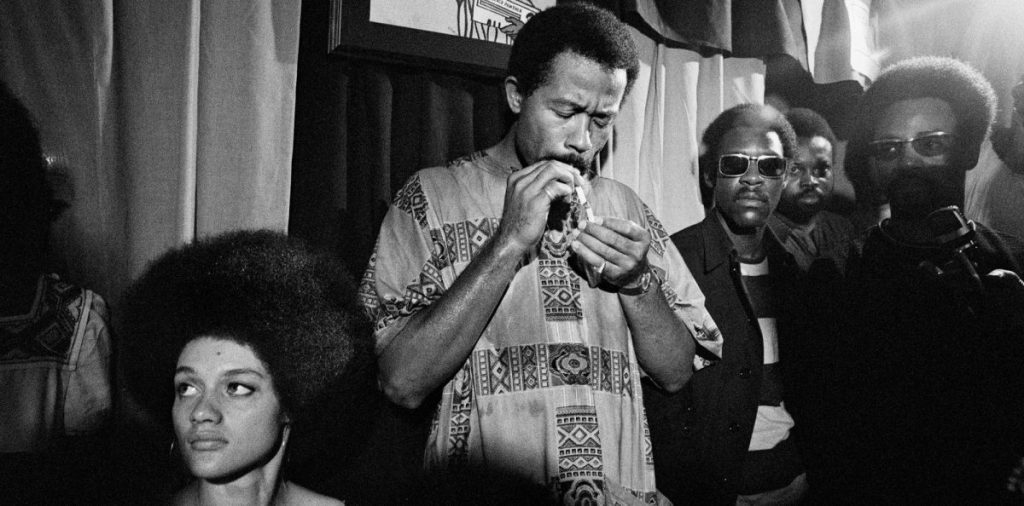



 Anouar Rahmani's Official Website